Buyer Guide · Custom Sportswear
How to Choose the Right Fabric for Custom Teamwear
A material-selection framework for B2B teamwear buyers comparing composition, structure, weight, stretch, decoration and sample evidence.
Short answer
Choose a teamwear fabric by matching composition, knit structure, weight, stretch, ventilation, opacity, hand feel, decoration method and end use. GSM is useful for comparison, but it is not a complete quality or performance measure. Shortlist a direction, then approve the actual fabric and finished garment by physical sample.
Start with the use case
State whether the garment is for match play, training, warm climate, cold-weather layering, travel, events, staff use or youth programs. The same sport can need different choices for a lightweight match jersey, warm-up layer and structured jacket.
Understand the terms
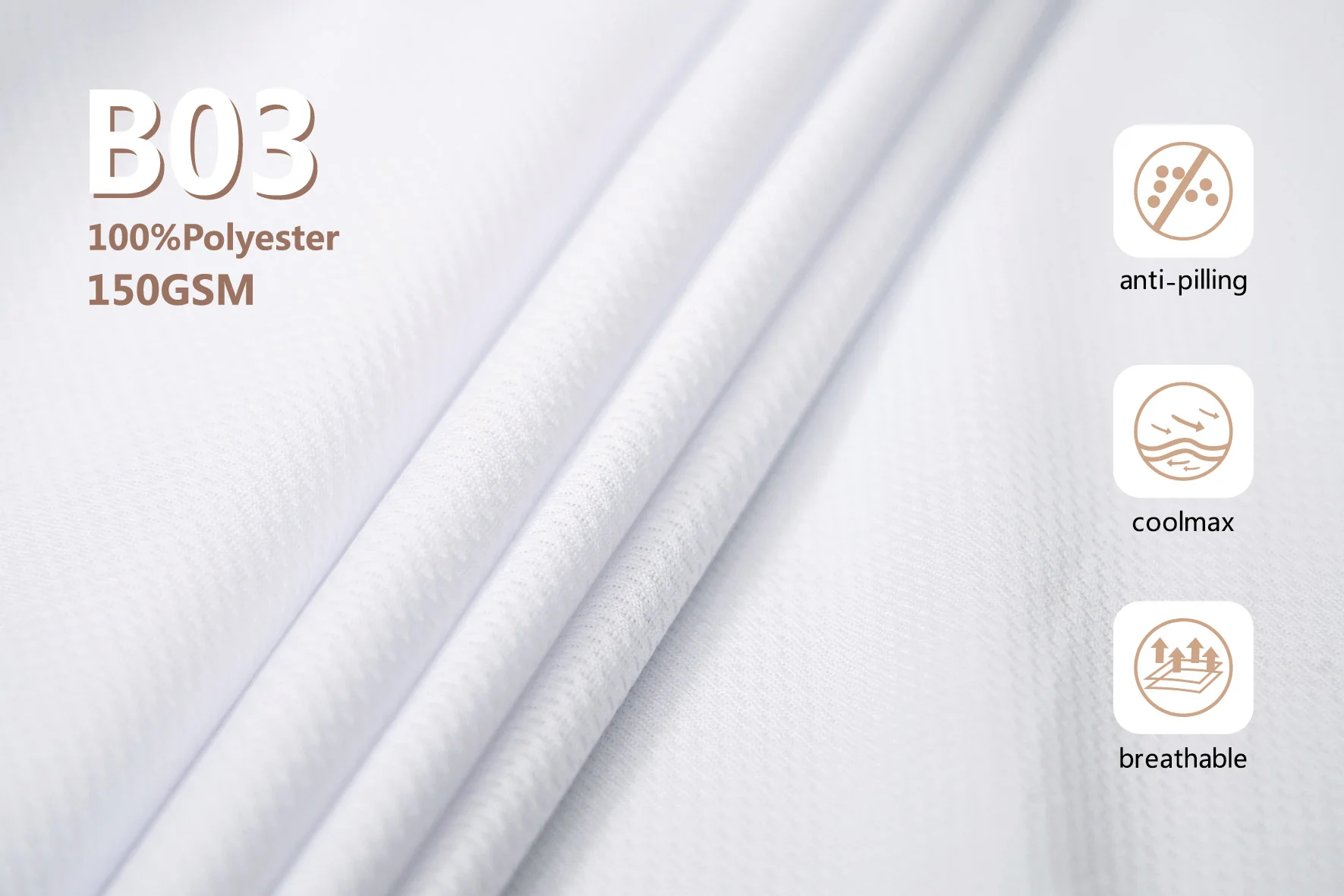
Composition describes the fibers. GSM describes mass, not automatically durability or breathability. Knit structure affects texture, drape, stretch and ventilation. Stretch and recovery affect fit and graphic behavior. Opacity, hand feel and decoration compatibility should be checked on the selected garment.
Use GSM as one comparison point
A lighter fabric may suit a warm-climate training shirt, but check opacity, drape, abrasion context and print appearance. A heavier fabric may offer more substance, but it is not automatically cooler, stronger or more comfortable. The supplied BUU-KR library contains reference directions; do not turn a reference value into a universal product promise.
Match fabric direction to the sport question
For jerseys and shorts, compare mesh structure, coverage, hand feel and seams. For fitted products, compare stretch direction and recovery. For colder conditions, compare fleece or shell direction with layering and lining. For detailed graphics, confirm the base fiber, color and decoration method before assuming the print will match a mock-up.
Build the fabric section into the RFQ
Send the sport, garment, intended use, climate, fit, preferred direction, known composition/GSM, stretch or mesh preference, color, decoration method, quantity, destination, target date and sample requirement. If no preference is known, ask for two or three directions with known data and confirmation items.
Buyer checklist
- Sport, garment and climate
- Composition, GSM, mesh or stretch preference
- Decoration method and base color
- Sample observations, quantity and destination